Elektrine
Log in Register
Paige Chat Timeline Gallery Friends Email Drive DNS Private DNS Domains VPN Kairo Nerve
Remote

Serhii Nazarovets

@serhii@mstdn.science
mastodon 4.6.8
  • Open on mstdn.science

Ph.D. in Social Communication. My research interests: Bibliometrics, Scientometrics, Scholarly Communication, and Library Science.

588 Followers
283 Following
43 Posts
Joined November 06, 2022
Location:
Kyiv, Ukraine
Blog:
https://panbibliotekar.blogspot.com
ORCID:
https://orcid.org/0000-0002-5067-4498
ResearchGate:
https://www.researchgate.net/profile/Serhii-Nazarovets
Open post
Serhii Nazarovets @serhii@mstdn.science
· 1mo ago
Preparing very seriously for my lecture on "The publish or perish and later models of fast science" at Open Science Uruguay 2026, at the kind invitation of @dprieto@mastodon.uy 🇺🇾 Step 1: read Mario Benedetti. So far, the preparation is going extremely well. What a wonderful poet. #OpenScience #Uruguay #MarioBenedetti #FastScience #Poetry #Literature

4
0
5
0
Open post
Serhii Nazarovets @serhii@mstdn.science
· 4mo ago

Bad papers, incorrect references, and superficial reviews existed long before #ChatGPT. AI did not invent poor scholarship – it simply made it scalable.

In our new paper, we argue that the debate should move beyond AI slop toward the broader concept of academic slop: low-quality scholarship produced without sufficient care, whether by humans or machines.

:doi: https://doi.org/10.1080/10875301.2026.2685154

#AcademicSlop #AISlop #ResearchIntegrity #AcademicPublishing #GenerativeAI

“Academic Slop”: Definition and Bibliometric Exploration of Its Relationship to AI Tools
Taylor & Francis

“Academic Slop”: Definition and Bibliometric Exploration of Its Relationship to AI Tools

Academic publishing has many quality-control mechanisms to avoid low-quality work being published. Yet, poor quality scholarship has historically found its way into print, and fluent-sounding artif...

12
1
11
0
Open post
Serhii Nazarovets @serhii@mstdn.science
· 2mo ago
An interesting evolution from Mike Thelwall. A year ago, he was cautiously exploring whether LLMs could approximate expert research assessment. Today, he reports that ChatGPT-5 mini reached correlations of up to 0.905 with expert REF2021 quality assessments across some disciplines, using a dataset of more than 107,000 UK research articles. :doi: https://doi.org/10.1515/jdis-2026-0058 #ResearchEvaluation #Scientometrics #ResearchAssessment #ChatGPT #LLM #AI #SciencePolicy
doi.org
2
2
3
0
Open post
Serhii Nazarovets @serhii@mstdn.science
· 3mo ago

Who are the "ideal immigrants"? A massive study in @scienceadvances@bird.makeup pooled data from 100 immigration experiments across 36 countries and 1.5 million immigrant profiles.

:doi: https://doi.org/10.1126/sciadv.adz2271

Perhaps most interestingly: people care much more about WHO an immigrant is than where they COME FROM. In short: your CV often matters more than your passport.

#ScienceAdvances #Migration #Immigration #PublicOpinion #PoliticalScience #SocialScience

doi.org
5
0
4
0
Open post
Serhii Nazarovets @serhii@mstdn.science
· 7mo ago

We evaluate science mostly through papers. But researchers report that up to 75% of project effort is data work — collecting, cleaning, documenting, and preparing datasets. A reminder that research outputs ≠ research work.

New paper in Research Evaluation: https://doi.org/10.1093/reseval/rvag008

#ResponsibleMetrics #OpenScience #DataCitation #ResearchEvaluation

doi.org
14
0
9
0
Open post
Serhii Nazarovets @serhii@mstdn.science
· 4mo ago

Science is often presented as something distant. Something that starts after a PhD, funding, or the "right" connections. But it doesn’t. I’ve put together a short presentation on how research actually begins – with a simple moment: "I don’t understand this."

👉 https://doi.org/10.13140/RG.2.2.23368.69126

#OpenScience #Research #EarlyCareerResearchers #PhD #AcademicLife #Science #HigherEducation #AI #Zotero #OpenAlex

doi.org
6
0
5
0
Open post
Serhii Nazarovets @serhii@mstdn.science
· 4mo ago

Most university rankings focus on Harvard, Oxford, and a handful of global stars. A recent paper takes a different approach - compares entire #HigherEducation systems:

📄 https://doi.org/10.1016/j.joi.2026.101839

One interesting finding is that countries such as the UK, Spain, and Italy show a more evenly distributed level of institutional performance, whereas systems like the US and China rely more heavily on a smaller group of elite universities.

#UniversityRankings #ResearchEvaluation #Scientometrics

doi.org
4
0
1
0
Open post
Serhii Nazarovets @serhii@mstdn.science
· 3mo ago

A nice surprise: the CUNY AI Lab has launched an AI Use Disclosure tool based on the GAIDeT (Generative AI Delegation Taxonomy) framework.

👉 https://tools.ailab.gc.cuny.edu/ai-disclosure/

Researchers can now generate publication-ready, structured disclosures of how generative #AI was used across different stages of the research workflow: from idea generation and literature review to data management and writing.

#OpenScience #ResearchIntegrity #GenAI #AcademicPublishing #GAIDeT #MITLicense

tools.ailab.gc.cuny.edu

AI Use Disclosure — CUNY AI Lab

Generate a transparent, publication-ready declaration of how you delegated tasks to generative AI, using the GAIDeT taxonomy. Runs entirely in your browser.

3
0
5
0
Open post
Serhii Nazarovets @serhii@mstdn.science
· 5mo ago
I’m glad to share my paper on publication activity and migration trends of Ukrainian SSH scholars during the first two years of the full-scale war. 👉 https://www.jscires.org/article/15/1/124 The key finding: the most productive researchers have largely remained in #Ukraine and many have maintained or even increased their publication activity, despite the challenges. #Science #OpenScience #Bibliometrics #HigherEducation #Scientometrics #Research #Academia
jscires.org

Journal of Scientometric Research - An Open Access Journal in Scientometrics

Accelerate your research publication with Manuscript-TM. Fast, transparent, and open access publishing for researchers worldwide.

6
0
8
0
Open post
Serhii Nazarovets @serhii@mstdn.science
· 7mo ago

The Lancet has published a short editorial on the state of Ukraine’s health system after four years of war. A few numbers worth noting:

Over 47,000 civilian casualties.
2,591 attacks on health infrastructure.
359 health workers killed.
68% of Ukrainians report a decline in health.
Among health workers: 81% burnout, 69% anxiety, 61% depression, and only 17% have access to psychosocial support.

👉 https://www.thelancet.com/journals/lancet/article/PIIS0140-6736(26)00355-7/

#Ukraine #HealthSystem #WarImpact #PublicHealth #HealthWorkers #Resilience

thelancet.com
11
0
13
0
Open post
Serhii Nazarovets @serhii@mstdn.science
· 4mo ago

A new preprint introduces SI-hacking (Special Issue hacking): when guest editors turn a special issue into a publication venue for themselves.

:oa: https://arxiv.org/abs/2601.07563

Yet over 1,000 "hacked" special issues are still published every year. Strikingly, #MDPI accounts for 85% of all SI-hacked special issues in the dataset, while #Frontiers contributes another 13%.

#AcademicPublishing #ResearchIntegrity #PeerReview

The Issue with Special Issues: when Guest Editors Publish in Support of Self
arXiv.org

The Issue with Special Issues: when Guest Editors Publish in Support of Self

The recent exceptional growth in special issues has led to the largest delegation of editorial power in the history of scientific publishing. Has this power been used responsibly? We provide the first systematic analysis of endogeny, the practice of publishing articles in ones own special issue. While moderate levels of endogeny are common, excessive endogeny constitutes scientific misconduct, as it stems from a clear conflict of interest. We define special issues containing more than 33% endoge

3
0
2
0
Open post
Serhii Nazarovets @serhii@mstdn.science
· 4mo ago

Grateful to #VUIAS for the opportunity to present my workshop "Ranked but Not Heard: Metrics and the Position of Ukrainian Scholarship" during the Academic and Public Positioning for Ukrainian Scholars workshop in Vienna.

The presentation explored academic visibility, scientometrics, open scholarly infrastructures, and the challenges Ukrainian researchers face within global systems of research evaluation.

👉 https://doi.org/10.13140/RG.2.2.35650.13760

#OpenScience #Scientometrics #ResearchEvaluation #Ukraine

doi.org
4
0
0
0
Open post
Serhii Nazarovets @serhii@mstdn.science
· 5mo ago

Can a great song title make your paper more visible? In our new study, we explored how famous song titles appear in Scopus-indexed article titles.

🎧 https://doi.org/10.1177/01655515261437409

We found that in most cases, these titles are used as catchy rhetorical signals to attract readers. But here’s the catch: they don’t necessarily lead to higher citations. So yes, your title can sound like a rock hit… but impact still depends on more than style.

#Scientometrics #AcademicWriting #Bibliometrics

Sage Journals: Discover world-class research
Sage Journals

Sage Journals: Discover world-class research

Subscription and open access journals from Sage, the world's leading independent academic publisher.

5
0
2
0
Open post
Serhii Nazarovets @serhii@mstdn.science
· 5mo ago

Gave a short online lecture on altmetrics today. Main point: altmetrics measure attention, not quality. Sometimes they capture real interest - sometimes just noise. Attention ≠ impact.

👉 https://doi.org/10.13140/RG.2.2.30154.12488

#Altmetrics #ResearchImpact #OpenScience #ScholarlyCommunication #Scientometrics

doi.org
5
0
2
0
Open post
Serhii Nazarovets @serhii@mstdn.science
· 4mo ago

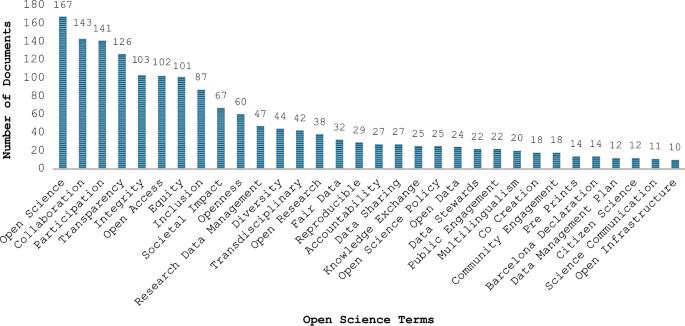
A new study analysing 248 CoARA action plans suggests that many organizations still treat Open Science more as a set of values than as concrete research practices.

:doi: https://doi.org/10.1007/s11192-026-05650-w

Open Access remains the dominant and most institutionalized form of Open Science, appearing in 41% of plans. Meanwhile, key UNESCO-promoted practices such as Open Evaluation or Open Methods are barely mentioned at all.

#OpenScience #CoARA #ResearchAssessment #OpenAccess

Advancing open science through research assessment reform? Content analysis of CoARA action plans - Scientometrics
SpringerLink

Advancing open science through research assessment reform? Content analysis of CoARA action plans - Scientometrics

Research assessment reform and open science are frequently presented as aligned reform movements within science, with assessment reform expected to incentivize open science practices. However, empirical evidence of this integration remains limited. We conducted a quantitative content analysis of open science terminology in action plans from Coalition for Advancing Research Assessment (CoARA) signatories—institutions publicly committed to reforming research assessment. Analysing 248 publicly avai

3
0
5
0
Open post
Serhii Nazarovets @serhii@mstdn.science
· 3mo ago

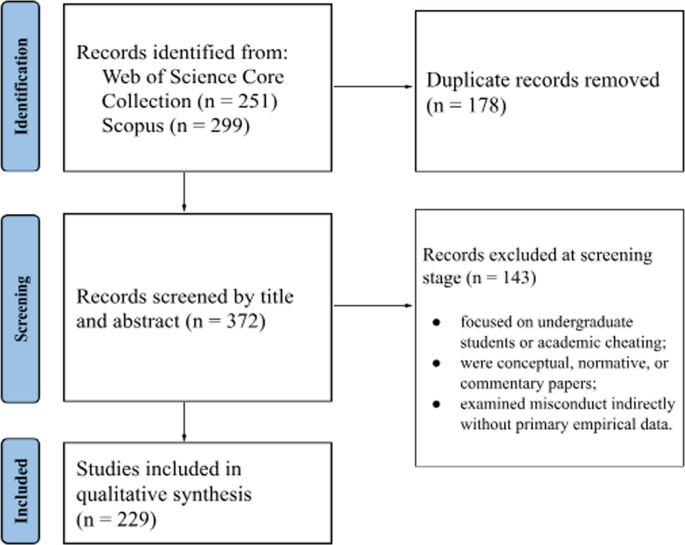
My latest article has been published in Research Integrity and Peer Review. The paper examines how scientific misconduct, questionable research practices, research climate, and supervision are studied across disciplines & research systems.

:doi: https://doi.org/10.1186/s41073-026-00214-1

One key takeaway: research integrity risks are shaped not only by individual behaviour, but also by research environments, supervision, evaluation systems.

#ResearchIntegrity #AcademicIntegrity #MetaResearch #SciencePolicy

Scientific misconduct, questionable research practices, and research climate: empirical approaches to integrity problems - Research Integrity and Peer Review
SpringerLink

Scientific misconduct, questionable research practices, and research climate: empirical approaches to integrity problems - Research Integrity and Peer Review

Empirical research on scientific misconduct and questionable research practices (QRPs) has increasingly adopted a systemic perspective, emphasising research climate, supervision, and organisational conditions. This PRISMA-guided scoping review synthesises 229 survey- and interview-based studies published between 2016 and 2025 to examine how misconduct and QRPs are empirically operationalised in perception- and climate-oriented research. Rather than aiming to estimate prevalence, the review focus

2
0
2
0
Open post
Serhii Nazarovets @serhii@mstdn.science
· 8mo ago

Honoured to be named “Leader of the Year – 2025” 🏆 at my university for research activity. Grateful to colleagues, leadership, co-authors, and to those who make it possible for us to keep working, teaching, and doing science. This recognition is a motivation to move forward. #MyAcademicLife

8
2
1
0
Open post
Serhii Nazarovets @serhii@mstdn.science
· 6mo ago

New blog post on @lseimpactblog@bird.makeup about our project. Why global databases are not enough, and why national scholarly infrastructures matter more than we think.

💡 https://blogs.lse.ac.uk/impactofsocialsciences/2026/04/01/by-linking-national-scholarly-infrastructures-we-can-better-understand-the-impact-of-global-research/

The solution is not to replace global systems, but to connect national ones into a network of interoperable, open infrastructures.

#OpenScience #Bibliometrics #OpenInfrastructure #ResearchPolicy

By linking national scholarly infrastructures we can better understand the impact of global research - LSE Impact
LSE Impact - Understanding impact and practice in academic research

By linking national scholarly infrastructures we can better understand the impact of global research - LSE Impact

Global scholarly information systems provide poor coverage for social science and humanities research taking place outside of the anglophone world and in languages other than English. Paul Donner, Stephan Stahlschmidt, Serhii Nazarovets, Igor Cojocaru, Irina Cojocaru, Marina Razmadze and Shushanik Sargsyan highlight a range of national initiatives taking place aimed at improving scholarly data for

5
0
3
0
Open post
Serhii Nazarovets @serhii@mstdn.science
· 7mo ago

New paper in Research Evaluation explores how researchers actually cite data. Key insight: data citations are far more complex than simple indicators of data reuse.

:oa: https://doi.org/10.1093/reseval/rvag008

They reflect scientific practice, community norms, attribution, and even reputation-building. A timely reminder: metrics alone cannot capture the real value of data work.

#OpenScience #DataCitation #ResearchEvaluation #ResponsibleMetrics #Scientometrics

doi.org
6
1
3
0
Open post
Serhii Nazarovets @serhii@mstdn.science
· 6mo ago

Our correspondence in @Nature@mstdn.social is out today - “AI used in warfare needs a strong ethical framework”.

📄 https://doi.org/10.1038/d41586-026-01008-7

We argue that the real question is not how effective AI is in war, but:

Who does it actually protect?
Who controls these systems?
Who is accountable for their failures?
And are decisions that risk civilian harm ever acceptable?

#AI #Ethics #WarAndAI #AIethics

doi.org

AI used in warfare needs a strong ethical framework

Letter to the Editor

5
0
2
0
Open post
Serhii Nazarovets @serhii@mstdn.science
· 8mo ago

An interesting study on how warfare affects birds in #Ukraine. The authors combined open-source intelligence, field observations, and eyewitness reports to show that even highly mobile species often remain in combat-affected areas: they die from explosions, lose nesting sites, and face the destruction of habitats and changes in water systems.

:doi: https://doi.org/10.1080/24750263.2025.2531125

In many ways, this is one of the first attempts to systematically document the real-time impact of #war on #biodiversity.

Wings of war: how open-source intelligence reveals the impact of warfare in Ukraine amid global avian biodiversity decline
Taylor & Francis

Wings of war: how open-source intelligence reveals the impact of warfare in Ukraine amid global avian biodiversity decline

In this era of massive biodiversity loss, birds hold the dubious distinction of being at the forefront. Currently, 21% of avian species are vulnerable to extinction, and 6.5% are functionally extin...

7
2
8
0
Open post
Serhii Nazarovets @serhii@mstdn.science
· 5mo ago

In this presentation, I explore the idea of "AI plagiarism" not as a simple violation, but as a mismatch between new modes of text production and outdated systems for assessing knowledge and contribution.

:doi: https://doi.org/10.13140/RG.2.2.25560.87049

If text no longer reliably reflects thinking, what exactly are we evaluating?

This is part of my workshop at the Science Festival 2026.

#OpenScience #AcademicIntegrity #GenerativeAI #ResearchEthics #ScholarlyCommunication #SciencePolicy #HigherEducation

doi.org
3
0
0
0
Open post
Serhii Nazarovets @serhii@mstdn.science
· 4mo ago

Today I had the pleasure of presenting my fellowship research at the weekly interdisciplinary #VUIAS seminar.

:doi: https://doi.org/10.13140/RG.2.2.35582.55364

One of the key messages was simple: metrics often reveal symptoms, but understanding integrity problems requires looking at research environments, incentives, and organisational cultures.

#ResearchIntegrity #Scientometrics #ResearchEthics #OpenScience #AcademicIntegrity #ScholarlyCommunication #HigherEducation #Science

doi.org
2
0
2
0
Open post
Serhii Nazarovets @serhii@mstdn.science
· 4mo ago

Russian disinformation does not succeed because people simply believe lies. It succeeds because it exploits existing fears, prejudices, and social divisions.

:doi: https://doi.org/10.5210/fm.v31i5.14649

A recent study shows how false stories about Ukrainian refugees were designed to activate stereotypes, fuel hostility, and turn vulnerable groups against one another. The goal was not only to spread misinformation but also to weaken solidarity and trust across Europe.

#Disinformation #Propaganda #Ukraine

doi.org
2
0
4
0
Open post
Serhii Nazarovets @serhii@mstdn.science
· 5mo ago

Today I gave a talk on @OpenAlex@mastodon.social — the largest open database of scholarly metadata. #OpenAlex offers a broader and more inclusive view of science, making previously “invisible” research more visible.

At the same time, it raises important questions about metadata quality, data completeness, and how we interpret metrics.

👉 https://doi.org/10.13140/RG.2.2.31061.79847

A key takeaway: research evaluation can vary significantly depending on the data source and analytical choices.

#OpenScience #Scientometrics

doi.org
3
0
6
0
Open post
Serhii Nazarovets @serhii@mstdn.science
· 6mo ago

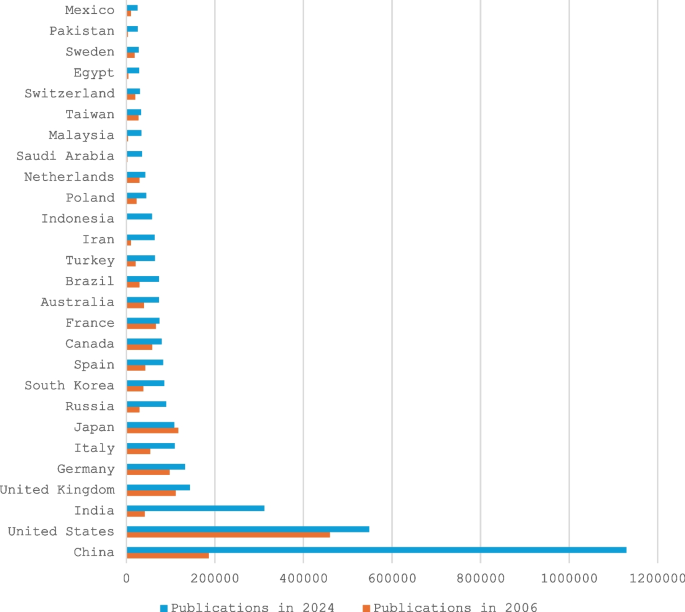
A new paper by Ioannidis & Baas highlights an uncomfortable shift: most scientific publications today come from countries that are not full democracies and have limited press freedom. In 2006, about two-thirds of global science was produced in full democracies. In 2024 – only 22%.

https://doi.org/10.1186/s41073-026-00190-6

Even more striking – 78% of publications come from countries with problematic press freedom, and there is no link between democracy and scientific productivity.

#SciencePolicy #Democracy

Most science is published from countries lacking in democracy and freedom of press - Research Integrity and Peer Review
SpringerLink

Most science is published from countries lacking in democracy and freedom of press - Research Integrity and Peer Review

Background Democracy and freedom of press may affect how science is prioritized, produced, communicated and disseminated. We aimed to map the production of scientific publications worldwide in terms of democracy and freedom of press ratings of countries. Methods This is a bibliometric study cross-linking global bibliometric data with democracy ratings and freedom of the press indices for countries around the world. Democracy ratings used the Democracy Index in 2024 and in 2006 (when first releas

4
0
2
0
Open post
Serhii Nazarovets @serhii@mstdn.science
· 6mo ago

In our new short letter, we explored where real discussion on complex scientific issues actually happens. Instead of articles or reports, we analysed letters to the editor in journals – using #geoengineering as a case.

:doi: https://doi.org/10.1515/reveh-2025-0161

These short texts turn out to be one of the few spaces where science becomes a dialogue: not only experts, but also broader publics engage, and discussions move beyond technical details to #ethics risks, and governance.

#OpenScience #SciComm

doi.org
3
0
3
0
Open post
Serhii Nazarovets @serhii@mstdn.science
· 7mo ago

Where do bibliometricians come from? 🤔 A new international study suggests a simple answer: mostly from academic libraries. Around 60% of people doing bibliometric work at universities are based there.

:doi: https://doi.org/10.1177/01655515261417634

The catch? Over 70% say they never had formal training in bibliometrics. People simply grow into the role while working with databases, indicators and research analytics.

#bibliometrics #scientometrics #researchmetrics #responsiblemetrics #openscience

The bibliometrics profession: Evidence from two global surveys, 2020 and 2022 - Barbara S. Lancho Barrantes, Andrew Cox, Hannelore Vanhaverbeke, Sabrina Petersohn, Silvia Dobre, 2026
Sage Journals

The bibliometrics profession: Evidence from two global surveys, 2020 and 2022 - Barbara S. Lancho Barrantes, Andrew Cox, Hannelore Vanhaverbeke, Sabrina Petersohn, Silvia Dobre, 2026

Bibliometrics has been embedded in higher education since the 1960s and now plays a central role in research evaluation and institutional visibility. Despite it...

4
0
1
0
Open post
Serhii Nazarovets @serhii@mstdn.science
· 10mo ago

#Scientometrics is a direct translation of the Soviet term naukometriya, introduced through the 1969 monograph by Vasily Nalimov and Zinaida Mulchenko. A new paper in @QSS_ISSI@scicomm.xyz reveals that around 15% of that monograph consists of fragments from Mulchenko’s PhD thesis on information flows in science — meaning that many core ideas of Soviet scientometrics were actually hers. Yet she almost disappeared from the historical record = #MatildaEffect

📄 https://doi.org/10.1162/QSS.a.397

#WomenInScience

doi.org
8
1
4
0
Open post
Serhii Nazarovets @serhii@mstdn.science
· 5mo ago

This paper explores the fascinating phenomenon of “zombie journals” – journals that continue to exist after their editorial boards resign and launch rival “breakaway journals.”

:doi: https://doi.org/10.1016/j.respol.2026.105519

Using cases from linguistics and bibliometrics, the study shows that journal brands can survive institutional crises, but often with dramatically changed author communities, citation patterns, and academic identities.

#AcademicPublishing #OpenScience #Scientometrics #JournalMetrics

doi.org

Redirecting

2
0
0
0
Open post
Serhii Nazarovets @serhii@mstdn.science
· 5mo ago

Almost skipped a new paper in #Scientometrics - glad I didn’t. A key point: fundamental research is often too uncertain for the market, so universities become crucial for helping ideas survive through startups, accelerators, and entrepreneurial networks. #Patent licensing, meanwhile, depends more on real long-term collaboration with industry than on fancy “technology transfer offices”.

:doi: https://doi.org/10.1007/s11192-026-05648-4

#HigherEducation #Innovation #Startups #Technology #Transfer

SpringerLink

Pathways to commercializing university knowledge: perspectives from entrepreneurial ecosystems, regional innovation systems, and innovation intermediation - Scientometrics

This study develops a pathway-based view of university knowledge commercialization by comparing university startup formation and patent licensing. Integrating insights from regional innovation systems, entrepreneurial ecosystems, and innovation intermediation, the study examines whether the effectiveness of university intermediation depends on the commercialization pathway and the regional innovation environment. Using panel data on university technology transfer in Japan, the analysis estimates

2
0
2
0
Open post
Serhii Nazarovets @serhii@mstdn.science
· 7mo ago

Virginia Tech published something many universities still lack: Practical guidance on how to use AI responsibly in research - step by step, across the entire research lifecycle.

🔗 https://www.research.vt.edu/research-support/forms-guidance/sirc/considerations-responsible-ethical-use-ai.html

Not abstract principles. Concrete prompts. Clear warnings about IP, confidentiality, hallucinations, and dual-use risks. #AI should support thinking — not replace it.

#ResponsibleAI #ResearchIntegrity #OpenScience #AIinResearch #AIinScience #AIethics #universities

Considerations for the Responsible and Ethical Use of AI
research.vt.edu

Considerations for the Responsible and Ethical Use of AI

4
1
0
0
Open post
Serhii Nazarovets @serhii@mstdn.science
· 3mo ago

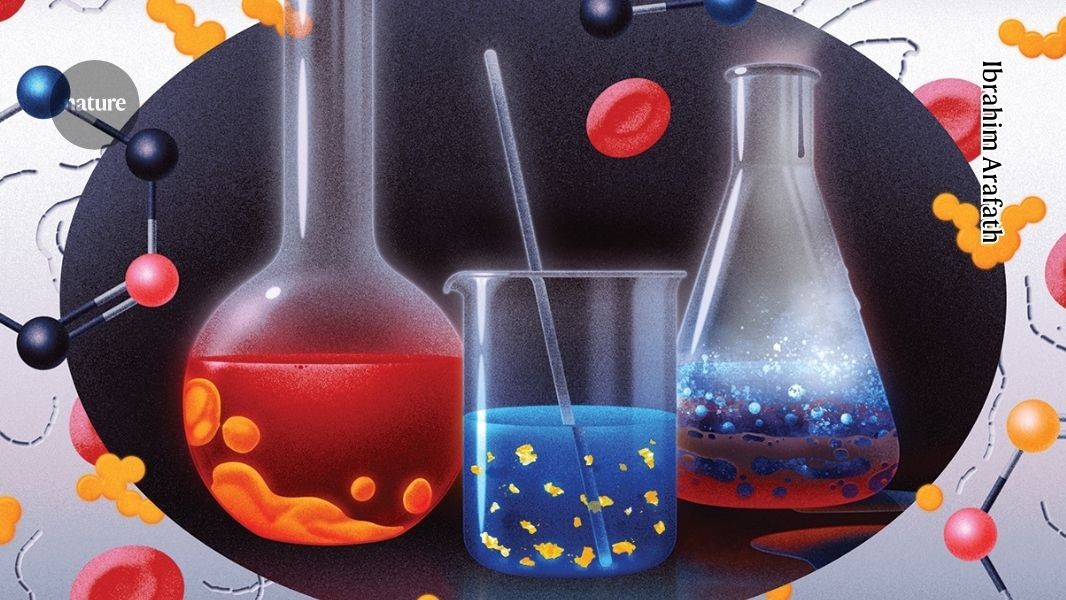
Nature's latest feature argues that the EU is trying to turn the current turmoil in US science into a historic opportunity:

👉 https://doi.org/10.1038/d41586-026-01955-1

A few striking facts:

• Europe publishes more research papers than the US.

• Horizon Europe could grow to €175–200 billion.

• Nearly 45% of EU research output involves international collaboration.

• Countries from Canada to Japan and Australia are joining parts of Horizon Europe.

#SciencePolicy #HorizonEurope #ResearchFunding #OpenScience

Europe as science superpower: what it will take to rival the US and China
doi.org

Europe as science superpower: what it will take to rival the US and China

Amid chaos in US science and geopolitical turmoil, Europe wants to position itself as a research haven — but questions about funding and innovation remain.

1
0
3
0
Open post
Serhii Nazarovets @serhii@mstdn.science
· 7mo ago

New commentary published in #Scientometrics: “Scientific collaboration without flights: Ukraine’s wartime adaptation.”

:doi: https://doi.org/10.1007/s11192-026-05576-3

Since 2022, #Ukraine has had no civilian air travel, severely limiting academic mobility. Yet, international co-authorship involving Ukrainian institutions has not declined — it has increased. A small piece on resilience, digital collaboration, and global academic solidarity.

#ResearchCollaboration #OpenScience #ScienceResilience #GlobalScience

Scientific collaboration without flights: Ukraine’s wartime adaptation - Scientometrics
SpringerLink

Scientific collaboration without flights: Ukraine’s wartime adaptation - Scientometrics

Ploszaj’s recent study in Scientometrics provides compelling evidence of the positive impact that long-haul air connectivity has on international scientific collaboration. Using a quasi-experimental approach, the author demonstrates that the introduction of new flight routes leads to measurable increases in co-authored publications. This commentary builds on those findings by examining a seemingly paradoxical case: Ukraine, where passenger air traffic ceased entirely following the Russian invasi

4
0
4
0
Open post
Serhii Nazarovets @serhii@mstdn.science
· 3mo ago

Analysing more than 30K cell biology papers 📄, the authors found that after performance-based evaluation systems began emphasizing first and corresponding authorship, the number of co-first and co-corresponding authors increased substantially.

:doi: https://doi.org/10.1016/j.joi.2026.101838

Interestingly, team sizes did not grow in the same way = credit was simply redistributed among more researchers.

#Scientometrics #ResearchEvaluation #Authorship #AcademicPublishing #ResearchPolicy

doi.org

Redirecting

1
0
1
0
Open post
Serhii Nazarovets @serhii@mstdn.science
· 6mo ago

A recent Journal of Informetrics study shows – There is no universal number of “too many authors.”

In some fields, 3–6 may already be unusual.
In medicine – dozens are common.
In physics – large teams are often the norm.

:doi: https://doi.org/10.1016/j.joi.2026.101803

Yes, #hyperauthorship can signal problems (e.g., honorary authorship, metric inflation). But the key question is not “how many authors?” 👉 it is: Is this abnormal for this field and time?

#Scientometrics #ResearchEvaluation #Bibliometrics

doi.org

Redirecting

2
0
1
0
Open post
Serhii Nazarovets @serhii@mstdn.science
· 6mo ago

Our new 📄 in Current Alzheimer Research looks at a strange, and worrying, phenomenon in scientific writing: tortured phrases. Instead of blood-brain barrier, some papers use bizarre alternatives like blood-brain obstruction or blood-cerebrum boundary.

:doi: https://doi.org/10.2174/0115672050460224260206052444

These are not just language errors, they can signal deeper issues such as weak #PeerReview or even #PaperMills.

#OpenScience #ResearchIntegrity #Bibliometrics #Neuroethics #AcademicPublishing

doi.org
2
0
0
0
Open post
Serhii Nazarovets @serhii@mstdn.science
· 7mo ago

Rare earth elements are at the core of today’s technological and geopolitical competition – from EVs to defence systems. #Ukraine is increasingly part of this landscape.

📊 Ukraine has strong scientific expertise, but it is concentrated in fundamental research, with limited capacity in processing, technology, and patents.

https://www.tandfonline.com/doi/full/10.1080/14631377.2026.2634631

💬 Ukraine has a rare window of opportunity. The question is: quarry or strategic actor?

#RareEarths #CriticalMaterials #Geopolitics #Innovation #EU

Raw material supplier or strategic actor? Ukraine’s future in the rare earth sector
Taylor & Francis

Raw material supplier or strategic actor? Ukraine’s future in the rare earth sector

This article examines Ukraine’s position in the rare earth elements (REEs) sector amid evolving geopolitical dynamics and the European Union’s efforts to diversify critical raw material supply chai...

2
0
0
0
Open post
Serhii Nazarovets @serhii@mstdn.science
· 7mo ago

A real case of how administrative interpretation can block international research collaboration. A Ukrainian researcher was deemed ineligible because a municipal (public) university was not considered “state” 🤯 under a specific interpretation.

This raises important questions about consistency and transparency in international funding schemes.

More details: 👉 https://www.linkedin.com/posts/nazarovets_nwo-nrfu-researchpolicy-activity-7432388975899852800-19Un/

#OpenScience #ResearchPolicy #HigherEducation #NWO #NRFU #Science #Transparency #ScholarlyCommunication

LinkedIn

#nwo #nrfu #researchpolicy #internationalcollaboration #ukraine #science #highereducation #researchfunding #academiccollaboration #transparency #scholarlycommunication | Serhii Nazarovets

Recently, I encountered a situation that, unfortunately, appears not to be an isolated case, but rather a sign of a broader systemic issue affecting Ukrainian researchers. This concerns participation in the joint initiative of the NWO (Dutch Research Council) 🇳🇱 and National Research Foundation of Ukraine (NRFU) 🇺🇦 aimed at supporting the involvement of Ukrainian scholars in international research projects. In my case, this was a real, fully developed research collaboration with an international

2
1
0
0
Open post
Serhii Nazarovets @serhii@mstdn.science
· 13mo ago

Make #AI use transparent & machine-readable. 🙌 We’re looking for journal editors ready to pilot GAIDeT in their submissions - even a few DOIs can set a new standard!

It’s simple to try - and if you don’t believe it, check the instruction: 👉 https://doi.org/10.5281/zenodo.17101228

#Crossref #AIinScience #OpenScience #ScholComm #AIethics

doi.org
3
0
2
0
Open post
Serhii Nazarovets @serhii@mstdn.science
· 37mo ago

The results of a large survey that investigated data citation practices, preferences and motivations of authors:

:doi: https://doi.org/10.1162/qss_a_00264

BIG question - When should research practice be adapted to current technical requirements and recommendations for data citation, and when should requirements and recommendations be adapted to reflect actual practice? 🤔

@QSS_ISSI@scicomm.xyz #data #citation #reuse #openscience #survey

doi.org
6
1
5
0
Open post
Serhii Nazarovets @serhii@mstdn.science
· 5mo ago

A recent study shows that the same paper can appear nearly twice as “impactful” in Scopus compared to Web of Science - not because it is cited more, but because each database defines the benchmark differently.

:doi: https://doi.org/10.1016/j.joi.2026.101810

This leads to a strange situation: the same researcher can be both “above average” and “below average” at the same time - like a kind of scientometric Schrödinger’s cat. 🙂

#research #impact #assessment #metric #citation

doi.org

Redirecting

0
0
2
0
Open post
Serhii Nazarovets @serhii@mstdn.science
· 6mo ago

An interesting study on humour in scientific talks (531 presentations, 870 jokes):

67% of jokes failed.
Only ~9% got real laughter.

Men joke slightly more, and native English speakers are more likely to succeed.

🙂 https://doi.org/10.1098/rspb.2025.3000

O yes... Joking in a foreign language is hard, and even in your own, it only works if the audience truly gets it.

#AcademicHumor #ConferenceLife #AcademicLife #ResearchCulture #ScholarlyCommunication

doi.org
0
0
0
0
Back
313k7r1n3
Elektrine

Tor hidden service

elekhj7afj4qnrr4yd3bkzslsyo5jgfxw3orgjkhlcxifueodybyiiad.onion

I2P eepsite

j6b6cyk6gjmepjih7jjadxgxvvf3lzzujljuu2v4biemzpg3naya.b32.i2p

Platform

  • Email
  • Chat
  • Timeline
  • VPN
  • DNS

Company

  • About
  • Pricing
  • Contact
  • FAQ
  • Lite (no JS)

Legal

  • Terms of Service
  • Privacy Policy
  • Transparency Report
  • Report Abuse
  • Warrant Canary
  • VPN Policy

Support

  • support@elektrine.com
  • Report Security Issue
Mail client setup IMAP mail.elektrine.com:993 POP3 mail.elektrine.com:995 SMTP mail.elektrine.com:465
© 2026 Elektrine. All rights reserved. Server: 23:38:42 UTC